idm007 Plumbing Maintenance, Uncategorized, Water Pipes, Water Pressure plumbing maintenance, pressure regulator, water pressure
What Is the Correct Water Pressure for a House? Lake Havasu Plumber Explains the Safe 45–65 PSI Range
Why Maintaining Proper Water Pressure Is Critical for Your Home’s Plumbing System
Most homeowners don’t think about water pressure until something goes wrong. As long as the shower works and the faucets turn on, it seems like everything is fine.
But behind the walls of your home, water pressure plays a huge role in protecting your plumbing system.
If pressure is too high, it can quietly damage pipes, fixtures, and appliances for years before a leak suddenly appears.
As plumbers serving Lake Havasu City, Bullhead City, Kingman, and surrounding Mohave County communities, one of the most common hidden problems we see in homes is excessive water pressure.
Keeping water pressure in the proper range can help prevent plumbing emergencies and extend the life of your entire plumbing system.
What Is the Ideal Water Pressure for a Home?
Plumbing codes allow residential water pressure up to 80 PSI, but that does not mean it is ideal for your plumbing system.
Most experienced plumbers recommend maintaining water pressure between 45 and 65 PSI.
This range provides strong water flow while protecting plumbing components from unnecessary stress.
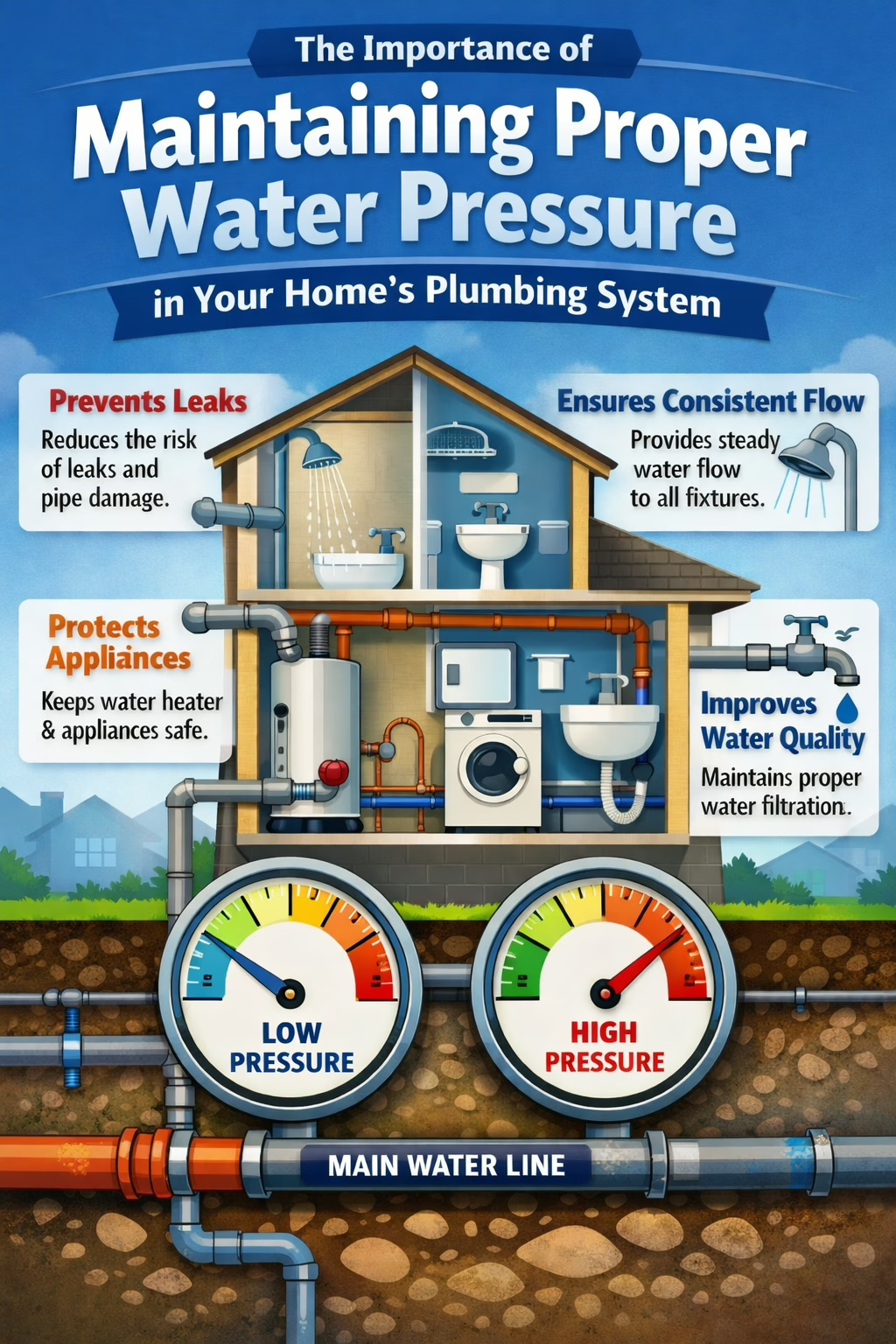
Maintaining pressure within this range helps:
• Extend the life of plumbing pipes
• Protect appliances like dishwashers and washing machines
• Reduce leaks and plumbing failures
• Prevent stress on water heaters and valves
Once pressure climbs above 65–70 PSI, the strain on plumbing components increases significantly.
Over time, that added stress can cause parts to wear out faster than they should.
What Happens When Water Pressure Is Too High?
High water pressure might feel great in the shower, but it can cause serious damage inside your plumbing system.
When pressure is too high, it constantly pushes against pipes, valves, seals, and appliance connections.
Some of the most common plumbing failures caused by high pressure include:
• Washing machine hose blowouts
• Faucet cartridge failures
• Toilet fill valve leaks
• Refrigerator ice maker line failures
• Dishwasher supply line leaks
• Water heater stress and premature failure
A burst washing machine hose can release hundreds of gallons of water per hour, causing serious water damage inside a home.
Many homeowners in Lake Havasu and Bullhead City are surprised to learn that high water pressure is often the root cause of these failures.
Why Water Pressure Often Spikes at Night
One thing many homeowners do not realize is that water pressure often increases during the night.
During the day, thousands of homes and businesses use water for showers, irrigation, dishwashing, and laundry. This heavy demand slightly lowers pressure in the municipal water system.
At night, when fewer people are using water, pressure inside the system increases.
As a result, many homes in Lake Havasu City and Kingman experience their highest pressure levels late at night or early in the morning.
In some cases, pressure can increase 10–20 PSI overnight.
This is why plumbers often recommend using a pressure gauge with a lazy arm, which records the highest pressure spike that occurs over a 24-hour period.
Without this type of gauge, homeowners may test pressure during the day and miss overnight pressure spikes.
How to Check Your Home’s Water Pressure
Checking water pressure is simple and inexpensive.
You can use a water pressure gauge that attaches to an outdoor faucet or hose bib. We recommend using a pressure gauge with a lazy hand (lazy arm). The lazy hand records the highest pressure reached while the gauge is connected to the system. Leave the gauge attached for at least 24 hours to capture the most accurate reading, including any overnight pressure spikes.
For the most accurate results:
-
Attach the gauge to a hose bib or outdoor faucet.
-
Turn the faucet fully open.
-
Leave the gauge installed for about 24 hours.
-
Check the highest pressure recorded.
If pressure exceeds 65–70 PSI, it may be time to have a plumber inspect the system.
Many homeowners searching for “water pressure check near me” in Lake Havasu or Bullhead City are often surprised how quick and affordable a professional pressure check can be.
The Role of a Pressure Regulator
Most homes connected to city water have a pressure reducing valve (PRV) installed where the main water line enters the house.
This device reduces incoming city water pressure to a safe level for your plumbing system.
In some municipal water systems, incoming pressure can exceed 100 PSI, especially in lower elevation areas.
A properly working pressure regulator typically lowers that pressure to about 50–60 PSI.
However, pressure regulators can wear out over time due to mineral buildup, debris, or age.
When a pressure regulator begins to fail, homeowners may notice:
• Water pressure that suddenly feels stronger
• Pipes making banging noises
• Fixtures starting to leak
• Water pressure that fluctuates throughout the day
If a pressure regulator fails completely, the home may be exposed to full municipal water pressure.
Open vs Closed Plumbing Systems
Another factor that affects pressure inside your plumbing system is whether your home has an open or closed plumbing system.
In older homes, water could sometimes flow backward into the municipal water supply when pressure increased. These were known as open systems.
Most modern homes now operate as closed systems.
A closed system occurs when devices such as these are installed:
• Pressure reducing valves
• Backflow prevention devices
• Check valves
These devices protect the public drinking water supply by preventing contamination.
However, they also prevent water from flowing back into the municipal system, which means pressure inside the home must be controlled internally.
Why Expansion Tanks Are Important
When water heats inside a water heater, it expands slightly.
In an open plumbing system, that expansion could push back into the city water line.
In a closed plumbing system, the expanded water has nowhere to go.
This can cause pressure inside the plumbing system to increase.
To prevent this, many modern plumbing systems use thermal expansion tanks.
Expansion tanks absorb pressure increases caused by heated water expanding inside the system.
This helps protect:
• Water heaters
• Pipes and fittings
• Valves and fixtures
• Household appliances
Water Systems in Lake Havasu, Bullhead City, and Kingman
Homes in Lake Havasu City, Bullhead City, and Kingman are served by municipal water systems that distribute water through pressurized pipelines.
Lake Havasu City distributes treated Colorado River water through a municipal water system serving homes and businesses throughout the city.¹
Bullhead City also operates a pressurized water distribution system using Colorado River water.²
The City of Kingman primarily supplies water from groundwater wells that feed a pressurized municipal distribution system.³
Because these systems operate under pressure, homes often install pressure regulators or backflow devices that create closed plumbing systems.
Homes on Well Systems
Homes that use private wells regulate pressure differently than homes connected to city water.
Well systems use a pressure tank and pressure switch to maintain pressure.
Common pressure ranges include:
• 30/50 PSI
• 40/60 PSI
Routine maintenance ensures that pressure tanks and switches continue operating properly.
When Should You Check Water Pressure?
Homeowners should check their water pressure every month and if this is not feasible at the very least once per year.
It’s also a good idea to check pressure if you notice:
• Sudden pressure changes
• Leaking fixtures
• Noisy pipes
• Dripping water heater relief valves
Many homeowners call a plumber in Lake Havasu City or Bullhead City when they notice these symptoms.
Often, the issue turns out to be something as simple as excessive water pressure.
Final Thoughts
Water pressure may seem like a small detail, but it has a huge impact on the health of your plumbing system.
Maintaining pressure between 45 and 65 PSI helps protect pipes, appliances, fixtures, and water heaters from unnecessary stress.
Regular pressure checks and properly functioning pressure regulators and expansion tanks can prevent many common plumbing problems.
A quick pressure test today could prevent a major plumbing repair tomorrow.
Sources
Lake Havasu City Water Division
https://www.lhcaz.gov/public-works/water
Bullhead City Water Utilities
https://www.bullheadcity.com/departments/water-utilities
City of Kingman Water Department
https://www.cityofkingman.gov/government/departments/public-works/water
International Code Council – International Plumbing Code
https://www.iccsafe.org
International Association of Plumbing and Mechanical Officials – Uniform Plumbing Code
https://www.iapmo.org
U.S. Environmental Protection Agency – Drinking Water Systems
https://www.epa.gov
U.S. Department of Energy – Water Heating Systems
https://www.energy.gov